

[Mar-2022] Download Real CIPS L4M5 Exam Dumps Test Engine Exam Questions
New L4M5 exam dumps Use Updated CIPS Exam
CIPS L4M5 Exam Syllabus Topics:
| Topic | Details |
|---|---|
| Topic 1 |
|
| Topic 2 |
|
| Topic 3 |
|
| Topic 4 |
|
| Topic 5 |
|
| Topic 6 |
|
| Topic 7 |
|
| Topic 8 |
|
| Topic 9 |
|
| Topic 10 |
|
| Topic 11 |
|
NEW QUESTION 53
Which type of question should be used to receive affirmation on statement?
- A. Open
- B. Closed
- C. Narrow
- D. Leading
Answer: B
Explanation:
Different questioning styles can be used to elicit desired responses:
Text Description automatically generated
NEW QUESTION 54
In a commercial negotiation, a procurement professional negotiates on his company's behalf. The power of buying organisation is the only factor that influences the behaviours of the other party. Is this assumption true?
- A. Yes, because buyer's brand, reputation and purchasing spend largely determine the outcomes
- B. Yes, because the outcomes of negotiation are attributable to the buying organisation
- C. No, because personal power of negotiators also attributes tothe outcomes
- D. No, because power of supplier is the only factor that influences the other party
Answer: C
Explanation:
The assumption is false, because when aprocurement professional negotiates on behalf of his employer, he brings the power of his organisation (its brand, reputation and purchasing spend) as well his own personal power (that which is embedded within him) to the negotiation.
From a negotiation perspective, both organisational and personal power have the ability to influence the behaviours of other or the cause of event. This power is clearly core to negotiation, and of enormous important in seeking to achieve the objectives.
NEW QUESTION 55
Cost and price analysis is very important for buyers when they are preparing for a negotiation with supplier.
Which of the following is a benefit of knowing supplier's fixed costs?
- A. With the sole understanding of supplier's fixed cost, the buyer would be able to know the volume at which supplier maximises their profit in short-run
- B. The buyer would be able to know the point at which the supplier would reject the offer
- C. The buyer would be able to get a comprehensive picture of supplier's efficiency
- D. The buyer would be able to know the right volume to reach break-even point
Answer: D
Explanation:
Explanation
Knowing supplier's fixed and variable costs is beneficial for the buyer in a negotiation. With these insights, the buyer would know the volume atwhich the supplier reaches break-even points and then offers significant discount due to economies of scale.
NEW QUESTION 56
Which of the following are signs indicating that the trust between buyer and supplier has improved? Select TWO that apply.
- A. Transparent decision makingprocess
- B. Cost overruns
- C. Less frequent communication on business requests
Duplication of effort - D. Decreasing percentage of missed delivery overtime
Answer: A,D
Explanation:
Explanation
Signs of trust in business relationships
* Mutually agreed and managed objectives
* Sharing information
* Managing conflict through joint problem solving
* On time delivery of products and services
* High-performance teams that feel empowered to get the job done
* Supplier welcomes opportunity to innovate
* Both parties share ideas and insight
* Clear criteria for decision making
LO 1, AC 1.4
NEW QUESTION 57
A public agency opens a tendering process for a road building project that lasts approximately 1 year. They post theirrequirements on public journal and receive some interests. After conducting due diligence process and selecting the lowest bidder, the project commences. However, the supplier complains that price of material increases because of a shortage of supply, thenthey demands an 5% uptick in contract value. The agency investigates the increment and sees that there is indeed a fluctuation in prices of supplier's input. They are likely to accept the proposal, but they are also concerned that supplier may demand more. To avoid making another concession with the supplier, which of the following should be a priority action of the agency?
- A. Seek approval from higher authority
- B. Document a contract variationthat only allows another concession if some specific conditions arise
- C. Disapprove supplier's demands until they finish the project
- D. Postpone the decision making until the budget is ready
Answer: B
Explanation:
Explanation
The agency (buyer) has made a concession about the price. Possibly the supplier will request another concession (the salami tactics). To avoid this to be happened, the agency should only allow a concession as an exception, make sure that the concession is documented and only permitted against some exceptional circumstances, and seek agreement to this from the supplier.
LO 3, AC 3.2
NEW QUESTION 58
Which of thefollowing is an objective of proposing phase?
- A. Check hypothesis and assumptions
- B. Create atmosphere conducive to agreement
- C. Trade concessions
- D. Start making tentative offers
Answer: D
Explanation:
In the study guide, CIPS lists 5 stages of an negotiation:
The opening phase: confirm understanding and get the issues on the table. At this stage, both parties should check agenda, authority and create atmosphere conducive to agreement The testing phase is an information gathering stage where the hypothesis and assumptions you have made in the planning stage can be tested and confirmed or disconfirmed The proposing phase: Both sides may start making tentative proposals regarding their offering.
The bargaining phase: Both parties trade concessions; the preliminary stages are over and proposals move from being tentative and general to being more definite and specific.
The agreement and closing phase: both parties should seek agreement or if TOP does not have the final authority, some sort of acknowledgement of what key terms are should be sought.
NEW QUESTION 59
Which of the following are recognised techniques in contract negotiation? Select THREE that apply.
- A. Ratification
- B. Framing and reframing
- C. Pacing and leading
- D. Anchoring
- E. Validation
- F. Role ethics
Answer: B,C,D
Explanation:
Explanation
The question asks about negotiation techniques which are not present in the book. In this question, there are only 3 recognised techniques:
- Framing and reframing: A frame is an assumption, or set of assumptions, that guides our attention and behavior. Reframing is the ability to identify and significantly change assumptions or perspectives. Framing has a significant impact on the effectiveness of negotiation outcomes and negotiator working relationships.
You can read more on framing and reframing here.
- Anchoring: Anchoring bias is well-known cognitive bias in negotiation and in other contexts. The anchoring bias describes the common tendency to give too much weight to the first number put forth in a discussion and then inadequately adjust from that starting point, or the "anchor." We even fixate on anchors when we know they are irrelevant to the discussion at hand. You can read more on anchoring here.
- Pacing and leading: Pacing and leading is a two-step lever of persuasion. First - You "match your pace" to the person you want to influence in as many ways as possible. You can do this by mimicking the way the person talks, stands, their appearance, etc. You can also mimic less tangible aspects like the way they act, or their emotional state.Second - Once you've set your pace with someone, lead them to whatever decision or behavior you want them to take! You can read more on pacing and leading here.
NEW QUESTION 60
Sumitomo Rubber Industries (SRI) is a Japan-based tyre manufacturer. In order to increase production, SRI is sourcing rubber from Southeast Asian firms. Which of the following micro factors are most likely to shift the balance of power to supplier? Select TWO that apply
- A. Costs of changing suppliers are high
- B. SRI's purchase amount makes significant proportion of supplier revenue
- C. SRI sets up its own rubber plantation
- D. Rubber from different suppliers is virtually similar
- E. There are no close substitutes for rubber
Answer: A,E
Explanation:
There are many factors that can influence the balance of power in a negotiation. These factors are classified into 3 levels:
Macro level: STEEPLE framework: social, technological, economic, environment, political, legal and ethical Micro level: Porter's five forces: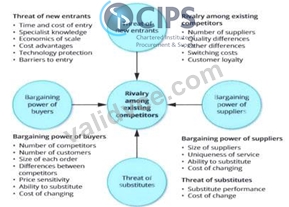
Diagram Description automatically generated
One-to-one buyer-supplier dynamics.
The question asks about the micro factors that increases supplier's bargaining power. Among 5 answers, only 2 are likely to increase buyer's power:
There are no close substitutes for rubber: the buyer has to buy rubber, not any other material.
Costs of changing suppliers are high: buyer entails a large barrier if they want to switch supplier.
Other answers cannot be correct because:
SRI sets up its own rubber plantation: Buyer secures its own supply
SRI's purchase amount makes significant proportion of supplier revenue: Suppliers are reliant on buyer. If the buyer stops buying from them, they can face serious cash flow problems Rubber from different suppliers is virtually similar: undifferentiated product would shift the power balance towards buyer.
NEW QUESTION 61
Which of the following statements about oligopoly isincorrect?
- A. Oligopolistic firms recognize their interdependence
- B. Prices in oligopoly are predicted to fluctuate widely and frequently
- C. A few firms play an important role in the sale of a product
- D. One firm's behaviour is a function of what its rivals do
Answer: B
Explanation:
Explanation
An oligopoly exists when there are small number of producers that exert a significant influence in the market.
Oligopoly's main characteristics are discussed as follows:
- Interdependence
The most important feature of oligopolyis the interdependence in decision-making of the few firms which comprise the industry. This is because when the number of competitors is few, any change in price, output, product etc. by a firm will have a direct effect on the fortune of its rivals, which will then retaliate in changing their own prices, output or products as the case may be.
- Importance of advertising and selling costs
A direct effect of interdependence of oligopolists is that the various firms have to employ variousaggressive and defensive marketing weapons to gain a greater share in the market or to prevent a fall in their market share. For this various firms have to incur a good deal of costs on advertising and on other measures of sales promotion. Therefore, thereis a great importance of advertising and selling costs under conditions of market situation characterised by oligopoly
- Group behaviour
Another important feature of oligopoly is that for the proper solution to the problem of determination of price and output under, it analysis of group behaviour is impor-tant.
- Indeterminateness of demand curve facing an oligopolist
In this question, 'Prices in oligopoly are predicted to fluctuate widely and frequently' is an incorrect statement as producers in oligopoly often try to set up price. Prices fluctuate more frequently in perfect competition.
LO 2, AC 2.2
NEW QUESTION 62
XYZ Ltd is importing goods from overseas. They prefer to pay theirsupplier in their own currency. Which of the following is a true statement?
- A. Supplier will receive less if XYZ's currency appreciates
- B. XYZ is able to pay less if their currency depreciates
- C. XYZ has an advantage in negotiating discounts if their currency appreciates
- D. XYZ has to pay more if their currency depreciates
Answer: C
Explanation:
Explanation
The effect of a change of relative exchange rates will be determined by which currency you pay your supplier in.
Table Description automatically generated
LO 2, AC 2.2
NEW QUESTION 63
A good negotiator invests time in understanding the needs of the individuals in a negotiation. Is this statement true?
- A. Yes, because individuals' needs always unify with their own organisation's needs and wants
- B. No, because satisfying individual needs will lead to conflict of interest and unethical practices
- C. No, becausenegotiator should attempt to satisfy the needs of the other organisation only
- D. Yes, because individual needs largely influence the outcomes of the negotiation
Answer: D
Explanation:
Skilled negotiators seek to understand the needs of the other parties, as well as their own. In doing so, it allows them to determine a strategy that their own needs are met. Failing to understand the other party's needs is one of the most common reason for an unsuccessful negotiation. In the commercial negotiation, procurement team does not negotiate with organisation, they negotiate with individuals. It is therefore important to recognise that there are two levels of needs:
The organisation - What the organisation wants to achieve. This is generally well stated and understood The individual - what is in it for the individual? This is generally not stated, rarely discussed, but very motivational. It is vitally important therefore that time is invested in understanding the needs of the individual Skilled negotiators are aware of the needs that occur at both levels, and develop creative options and strategies that attempt to satisfy these needs.
NEW QUESTION 64
Which of the following are hardball tactics in negotiations? Select TWO that apply.
- A. Expand the pie
- B. Snow job
- C. Bridging
- D. Sweetening the deal
- E. Good cop, bad cop
Answer: B,E
Explanation:
In difficult negotiations and disputes, hardball tactics like punishment and threats often seem like the only way to win concessions. Some negotiators seem to believe that hardball tactics are the key to success in any negotiation. They resort to extreme demands and even unethical behaviour to try to get the upper hand in a negotiation.
The following are 8 typical hardball tactics:
1. Good cop / Bad cop
2. Low ball / High ball
3. Bogey
4. The Nibble
5. Chicken
6. Intimidation
7.Aggressive Behaviour
8. Snow Job
You can read the details of each tactic here.
In the contrary to hardball tactics, negotiators can adopt integrative approach to the negotiation. Some of integrative tactics are:
1. Expand the Pie
2. Bridging
3. Post Settlement -Settlement
Et cetera
NEW QUESTION 65
To buying organisation, savings can be achieved from different saving levers or tactics. Which of the following are means that deliver savings through optimising specifications?
- A. Part substitution
- B. Compare total cost of ownership
- C. Value engineering
- D. Budgetlinkages
- E. Volume pooling
Answer: A,C
Explanation:
If driving greater value and efficiency from your supply base is your end, you should remember that there are many ways to do this without seeking to negotiate lowerprices. Below are 7 types of saving levers:
Table Description automatically generated
NEW QUESTION 66
Which of the following is most likely a consequence of falling interest rate?
- A. Increase savings
- B. Decreaseconsumption
- C. Increase aggregate demand
- D. Decrease investment
Answer: C
Explanation:
If interest rate are too low and credit is too, cheap rates can fund a spending boom with consumers and businesses buying (investment) more than they can afford to pay back.
NEW QUESTION 67
Which of the following would cause a demand curve for a good to be price inelastic?
- A. The luxury goods
- B. The necessary goods
- C. There are a great number of substitutes for the good
- D. The consultancy service
Answer: B
Explanation:
Explanation
Essential goods andservices such as electricity, fuel, basic food stuffs, commuter transport and habitual products such as tobacco, alcohol and sugar-based drinks are often sited as facing a relatively inelastic demand curve. This means when the price goes up, the quantity demanded does not decrease very much and so they are often the target of government taxation.
LO2, AC 2.2
NEW QUESTION 68
Which ofthe following is a true statement regarding macroeconomic factors and their potential impact on negotiations?
- A. Expectations on macroeconomic prospect are always correct
- B. Macroeconomic factors always directly influence the negotiations
- C. Changes in macroeconomic factors may affect businesses and individuals differently
- D. Macroeconomic factors cannot be influenced by anyone's expectation or sentiment
Answer: C
Explanation:
Explanation
'Macroeconomic factors always directly influence the negotiations': This statement is false. For any given negotiation it is not the macroeconomic factor itself that necessarily influences the negotiation but the change or rate of change that factor.
'Changes in macroeconomic factors may affect businesses and individualsdifferently': This statement is true.
Macroeconomic factors are factors that have general effects on the economy and many businesses may be completely unaffected or affected more or less than others in the same industry by a change in a factor.
'Macroeconomic factors cannot be influenced by anyone's expectation or sentiment': This statement is false.
When it comes to macroeconomic factors another key consideration is expectation regarding what might happen to these factors, or specifically the measures, metrics or percentage rates associated with these factors in the future.
'Expectations on macroeconomic prospect are always correct': This statement is false. Expectations are not always correct.
LO 2, AC 2.2
NEW QUESTION 69
In which of the following costing methods, overhead costs are applied in proportion to production volume?
- A. Mark-up costing
- B. Absorption costing
- C. Marginal costing
- D. Activity-based costing
Answer: B
Explanation:
There are 3 major costing methods:
Marginal costing
* Uses marginal cost of producing addition units
* Uses variable cost to derived a unit cost (does not include fixed cost)
* Fixed cost treated as a 'period cost' and deducted, as a total amount, from total contribution to profit for the period, in the firm's profit and loss account Absorption costing
* Calculates total cost of producing product
* In addition to variable cost, a fair proportion of fixed cost is allocated to (absorbed) eachunit of output, as a fixed cost per unit Activity based costing
* Similar to absorption costing but with fixed cost allocated to products on the basis of the cost of activities used in producing them LO 2, AC 2.1
NEW QUESTION 70
Which of the following are most likely to be characteristics of a perfectly competitive market? Select TWO that apply
- A. In a competitive market, both buyers and sellers areprice givers
- B. Firms can freely enter or exit the market
- C. In a perfectly competitive market, each seller has a large impact on the market price A perfectly competitive market consists of products that are all slightly different from one another
- D. There are many buyers and sellers in the market
Answer: B,D
Explanation:
Explanation
A perfectly competitive market is one with the following features:
- There are many firms producing identical or very similar (homogeneous) goods or services
- There are no barriers toentry to the market or exit from the market - anyone can enter or leave easily
- Both producers and customers have perfect knowledge of the market place, prices, costs of production and influences on demand and supply Under these conditions, the price andquantity will always tend toward equilibrium as any producer that sets a price above equilibrium will not sell anything at all, and any producer that sets a price below a equilibrium will obtain 100% market share in theory. The demand curve is perfectly elastic, which means that it will be horizontal. In a perfectly competitive market, it is difficult to increase profits through pricing, and suppliers instead must focus on their cost structure. As these conditions imply, there are few if any examples of perfectly competitive market.
LO 2, AC 2.2
NEW QUESTION 71
When is the best time to adopt accommodating style according to Thomas-Kilmann conflict mode instrument?
- A. When buyer and supplier have equal power but are strongly committed to mutually exclusive goals
- B. When both buyer and supplier want to find anintegrative solution as their concerns are too important to be compromised
- C. When preserving harmony and avoiding disruption with supplier are especially important
- D. When buyer needs to gather more information to gain more advantages in later negotiations
Answer: C
Explanation:
Explanation
According to Thomas-Kilmann conflict model instrument, there are 5 conflict management styles:
Accommodating is an unassertive andcooperative approach to resolving the conflict. Accommodating means conceding to the other party with little debate or fight, not challenging or strongly putting forward your own point of view and generally giving and yielding to the other party's point of view. Accommodating is best used when:
1. When others can resolve the conflict more effectively
2. When the issue is much more important to the other person than to yourself - to satisfy the needs of others and to show you are reasonable
3. To build upsocial credit for later issues which are important to you
4. When continued competition would only damage your cause
5. When preserving harmony and avoiding disruption are especially important
6. To aid in the managerial development of subordinates by allowing them to experiment and learn from their own mistakes LO 1, AC 1.1
NEW QUESTION 72
Which of the following are the most typical characteristics of integrative approach to negotiation? Select TWO that apply.
- A. Positional-based
- B. Claiming value
- C. Creating more value
- D. Short-term wins
- E. Interest-based
Answer: C,E
Explanation:
Integrative approach to negotiation used when the interested parties are attempting to create more of something of value to share, also known as collaborative approach or win-win. Integrative, interest-based negotiation can facilitate constructive, positive relationship and establishes contracts between parties on a foundation of goodwill. In integrative bargaining, both parties seek to 'expand the pie' by creating more value for both the buyer and the seller. Integrative negotiation 'shares thepie' and is interest rather than positional based.
In distributive bargaining, the focus is on claiming value and getting as much of the pie as parties can.
Table Description automatically generated
LO 1, AC 1.2
NEW QUESTION 73
Jasmine and the IHL sales team have a negotiation scheduled with one of AB's lead buyers, Samuel, at AB's premises. This is one of the biggest negotiations that Jasmine has been involved in and is eager not to make any mistakes. Jasmine has heard from a colleague that Samuel tends to adopt an integrative negotiation style.
IHL senior management decides to send a team of three members to the negotiation. Jasmine is among the team and she is assigned to check body language, reactions, feeds insight to her leader and to record important comments and information from the meeting for minutes. Which of the following are roles of Jasmine in the forthcoming negotiation? Select TWO that apply.
- A. Secretary
(Correct) - B. Observer
- C. Technical expert
- D. Chief negotiator
- E. Commercial expert
Answer: A,B
Explanation:
A negotiating team can be as few as two people, and one person can play one or more of these roles:
Table Description automatically generated
As from the scenario, Jasmine will act as an observer and a scribe (or secretary).
NEW QUESTION 74
The trust is built based on the other party's professional qualifications or proven or certified technical capability or experience is known as...?
- A. Contractual trust
- B. Irrevocable Trust
- C. Competence trust
- D. Goodwill trust
Answer: C
Explanation:
Trust is the expectation that the other party will behave in a predictable and mutually acceptable way. In inter-firm relationships, the presence and absence of trust can affect the level of cost in a relationship. The existence of trust is taught to lower the transaction cost in a relationship. Dr. Mari Sako identified taxonomy of
3 types of trust in commercial relationship, which is very useful from the perspective of procurement.
Contractual trust: Trust based on the contract with TOP. This is potentially the weakest source of trust if there is nothing else to base the trust on, but it is the quickest to establish.
Competence trust: Trust based on TOP's professional qualifications or proven or certified technical capability or experience.
Goodwilltrust: Trust based on knowing TOP has your interest at heart and will not behave opportunistically.
This is potentially the strongest type of trust, but it takes the longest time to build.
NEW QUESTION 75
The buyer's bargaining power tends to berelatively higher than supplier's bargaining power in which of the following circumstances?
- A. The buyer's spend takes up a small proportion of supplier revenue
- B. The buyer does not have the option to move to an alternative supplier
- C. The buyer demand isso urgent that it can't be postponed
- D. The buyer is large in size relative to its suppliers
Answer: D
Explanation:
Buyer power gives customers/consumers (buyers) the ability to squeeze industry margins by pressuring firms (the suppliers) to reduce prices or increase the quality of services or products offered.
There are four major factors to consider when determining the bargaining power of buyers:
1. Number of buyers relative to suppliers: If the number of buyers is small relative to that of suppliers,the buyer's power will be stronger.
2. Dependence of a buyer's purchase on a particular supplier: If a buyer is able to get similar products/services from other suppliers, buyers depend less on a particular supplier. Therefore, the power of the buyer would be greater.
3. Switching costs: If there are not many alternative suppliers available, the cost of switching is high.
Therefore, buyer power would be low.
4. Backward Integration: If the buyer is able to integrate or merge suppliers, the buyer has greater bargaining power over the existing suppliers.
When is Bargaining Power of Buyers High/Strong?
There are fewer buyers relative to that of suppliers
The switching costs of the buyer are low
If the buyer is able to backward integrate
The buyer purchases product in bulk (high volume)
The buyer is able to get similar product/services from other suppliers
The buyer purchases the majority of the seller's products
Several substitutes are available on the market
Product is not differentiated
NEW QUESTION 76
Which of the following is the most appropriate pricing arrangement in contracts where major inputs are commodities?
- A. Standard schedule of rates
- B. Price adjustment mechanism
- C. Fixed pricing arrangement
- D. Cost reimbursable pricingarrangement
Answer: B
Explanation:
In contracts which have major commodity input, the price is determined by market forces with no individual supplier or buyer able to influence it significantly.Prices are much more variable even within long term contracts and seeking a fixed price would create financial risks for both the buyers and the suppliers. It is often intelligent to agree a contract price adjustment mechanism to allow for market price changes so both sides share risk.
NEW QUESTION 77
A procurement professional is preparing for anegotiation with supplier. She is setting targets for price which her company is seeking to achieve. Which of the following acronyms can help her identify limits before engaging in the negotiation?
- A. PPCA
- B. MIL
- C. RAQSCI
- D. TIMWOOD
Answer: B
NEW QUESTION 78
......
Pass Your L4M5 Dumps as PDF Updated on 2022 With 165 Questions: https://www.validvce.com/L4M5-exam-collection.html
Verified L4M5 Dumps Q&As - L4M5 Test Engine with Correct Answers: https://drive.google.com/open?id=1fPAx542l0q1MrinwG51WacLeB3WzA3vI
